A mid-size Midwest manufacturing city retired its paper-based dispatch system and launched on-demand service for all residents. SHARE runs fixed-route and demand-responsive service from one platform.
The city ran fixed routes serving downtown and a limited set of residential areas. Anyone who needed to reach employers outside the city had no reliable option. Residents without a car could not reach jobs that were just a few miles beyond the route endpoints.
Dispatch was a pen-and-paper operation. Demand-responsive ADA trips were hard to coordinate accurately at speed. The pace of requests was outrunning what the system could handle. Some residents began calling emergency services to get to medical appointments. The transportation gap had become a public safety issue.
The city needed a platform that could manage on-demand scheduling, dispatch, and routing alongside fixed-route service. It also needed to work for residents who did not have smartphones or digital access.
SHARE replaced the pen-and-paper dispatch system with a live platform that manages both fixed-route and demand-responsive trips. Dispatchers moved from coordinating trips manually to managing from a single dashboard. Residents got reliable booking and arrival notifications without requiring dispatcher involvement for every trip.
SHARE's scheduling platform manages both fixed-route and on-demand trips from a single system, letting dispatchers handle demand-responsive ADA service alongside regular routes without separate tools.
Residents booked rides through SHARE's web-based rider app. For residents without digital access, phone-based booking routed through the dispatch team kept the service accessible for senior riders and those without smartphones.
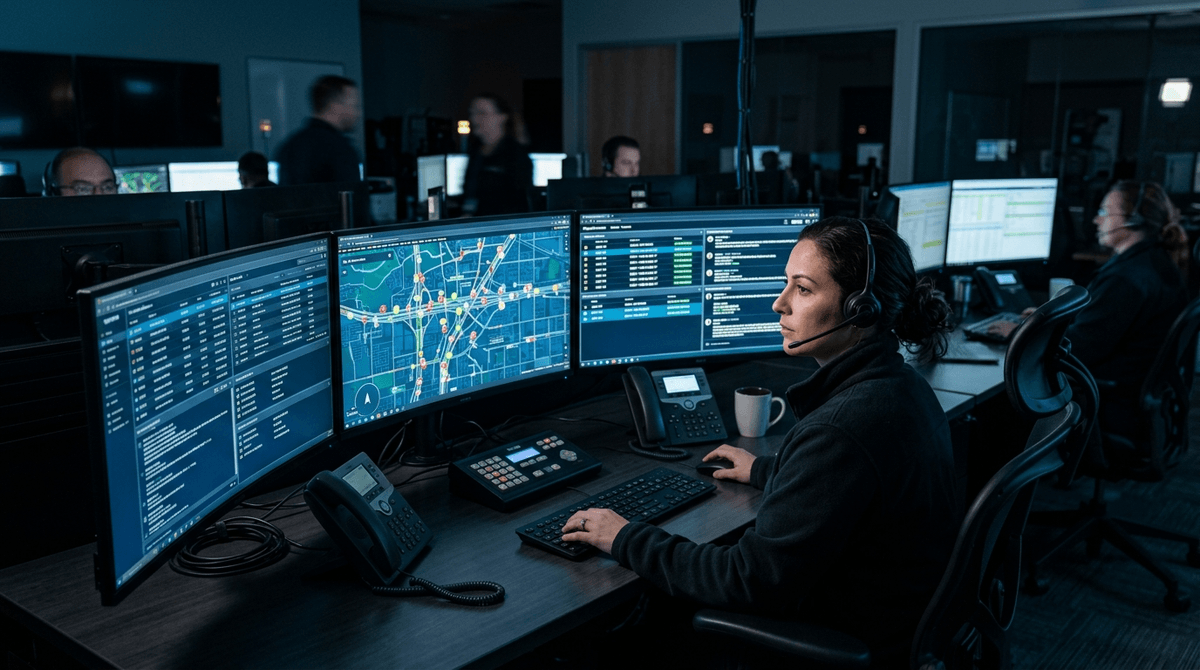
SHARE's live dispatch dashboard replaced the pen-and-paper system, giving the transit team real-time visibility into every vehicle, trip, and rider status from one screen.
The city used SHARE's routing tools to build and adjust routes on demand, including same-day custom routes for community events, without relying on engineering or manual route planning.
The city went from serving roughly 1 in 100 residents to 1 in 25, a 4x increase in ridership, while expanding the service area beyond county lines for the first time.
The pen-and-paper dispatch system was fully retired. All scheduling, dispatch, and rider communication moved to SHARE's platform, with no legacy tools remaining.
Fixed-route and on-demand service ran from a single SHARE instance. No additional tools were required for scheduling, dispatch, or rider booking.
Get the full case study as a PDF, including program details, outcome data, and how SHARE runs fixed-route and on-demand transit from a single platform.
Enter your work email and we'll send you the full case study.
Book a demo to see how SHARE handles on-demand and fixed-route transit for municipalities replacing legacy dispatch systems.